
If bumblebees are so smart, why are they so stupid?
In which Hari discusses canoeing, drowning and flight

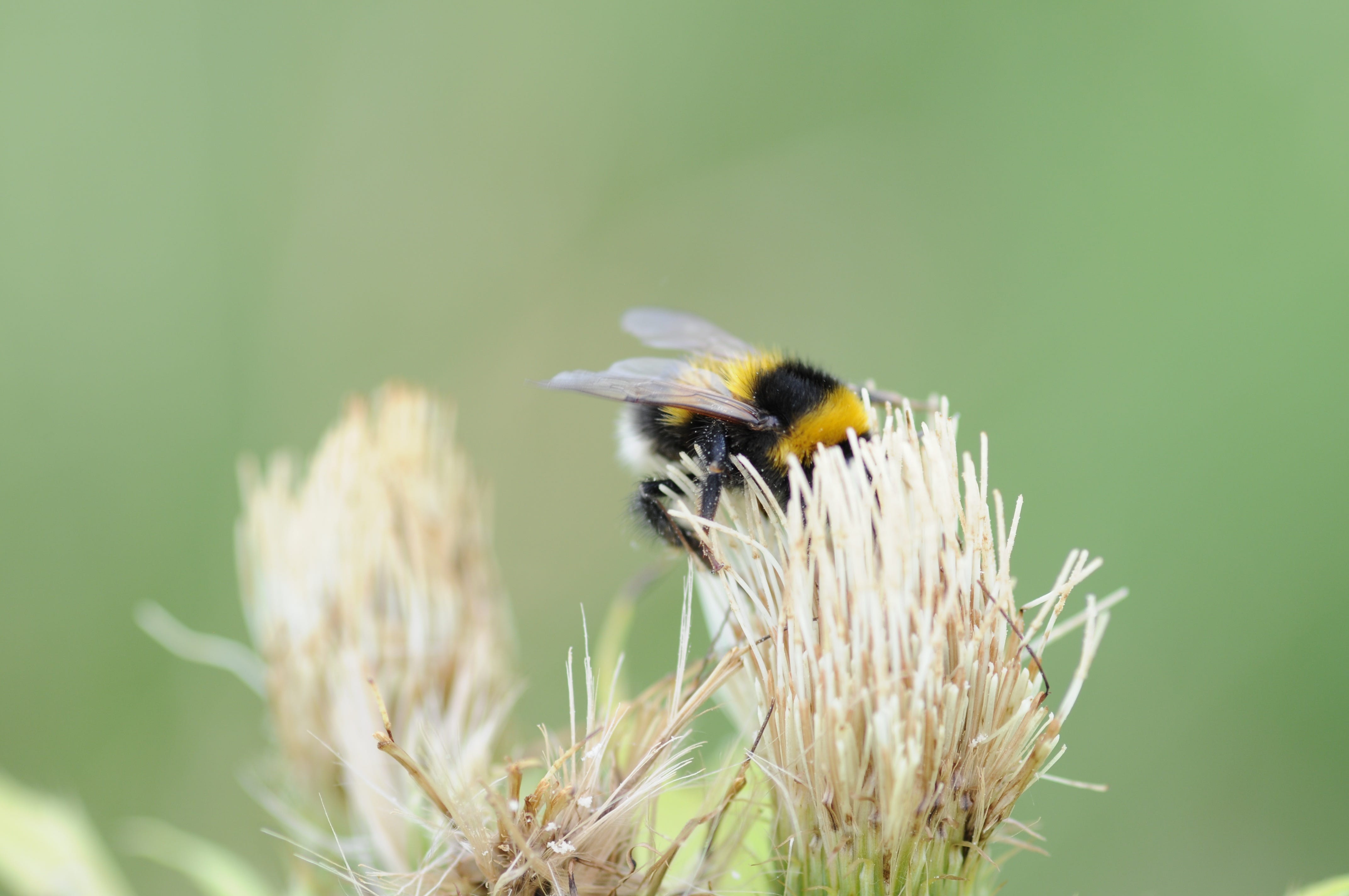
Image by biglinker from Pixabay
It was my birthday last week, and for my birthday my partner took me canoeing. On that canoeing trip, we rescued no fewer than five bumblebees from certain death because they had fallen into Brecon canal and could not get back out. We both had the same question: how, when bumblebees have lived in areas with canals for hundreds of years, are so many of them dying in this manner?
As an aside, I didn’t plan this to be a bumblebee series, by the way, bees are just making their way into my life at the moment.
Here is the scene: we are gently paddling down the canal when I spot a ripple in the water. I turn my head and notice a red-tailed bumblebee male (characterised by a black body, orange tail and yellow face), rolling around on the surface of the water like a Jim Carrey character having a seizure. I shouted, and the two of us frantically back-paddled until my other half could reach his oar in and pick him up. I pointed out he could do this with his hand, but he was insistent that the ungrateful little goblin would sting him at the earliest opportunity. That being said, the River Usk, which feeds the canal, is fairly polluted, so maybe that was for the best.
We put the little gentleman on the bench in the middle of the boat, and my boyfriend gave me regular updates about how he was doing from his place in the back seat. After he had come round and dried himself off, we decided that perhaps we should put him on some flowers on the canal’s bank so that he could have a little snack before buzzing on his bee-ey way. Reader, he walked off the flower and fell straight back into the canal. We had to put him on the boat for another half an hour to dry off again.
The next time we thought ‘ok, nice and far. We’ll lean out of the boat to make sure he’s not too close’. So, we parked up the boat to do some painting, and let him off there to keep an eye on him for a bit. Reader, he walked from the banking back into the water. At this point, Tom pointed out that it was probably better to let the stupid bastard drown, because otherwise he might breed and create other, stupid offspring. I’m not a wildlife documentary cameraman, and I felt it would be wrong to allow him to die on my watch, so we pulled him out again and gave him one more shot. This time, to our knowledge, he managed to stay on land.
In the next hour and a half, four other bumblebees (a buff-tail, two white-tails – a male and a female – and I think a tree bumblebee) graced our boat with their idiotic presence. Each time, I would scream as we passed them, and then Tom and I, the eco-conscious Laurel and Hardy, would have to shimmy our canoe sideways across the canal while viciously arguing and trying not to capsize, until we managed to pull the furry fellows out from the depths. Our relationship has never come under such strain. How did this keep happening, and why haven’t bees just learned not to drown?
Well, one answer might be that bees use visual cues from opaque surfaces to measure their ideal altitude. One study done on honeybees showed that, when placed on top of mirrored surfaces, honeybees were unable to maintain their altitude, eventually crashing onto the mirrored surface. Human pilots are reported to also struggle with maintaining altitude when they cannot measure groundspeed. A canal is still water, meaning that it serves as a reflective surface. When faced with crossing a large body of still water, the little fluffy fellows can’t work out how high up they’re supposed to be, and they eventually crash land on the water.
Bumblebees are not stupid. They have been recorded using tools, solving puzzles and cheating. But flight is very complex and requires a huge amount of unconscious load. It is therefore unlikely that, at least in our lifetimes, bees will develop mechanisms to traverse human still-water structures.
So, next time you’re on a canal or near a pond, keep an eye out. There will likely be a fuzzy friend who is desperately awaiting your assistance. In this instance, selective breeding can only do so much – bees evolved in a world that wasn’t made for us, and so we need to make sure we’re keeping them safe in a world that wasn’t built for them.
Sincere question. Haven't there always been bodies of water that bees have had to cross without crashing? If so, it seems likely that other factors, like some kind of 'pollution,' is affecting their ability to successfully navigate.